

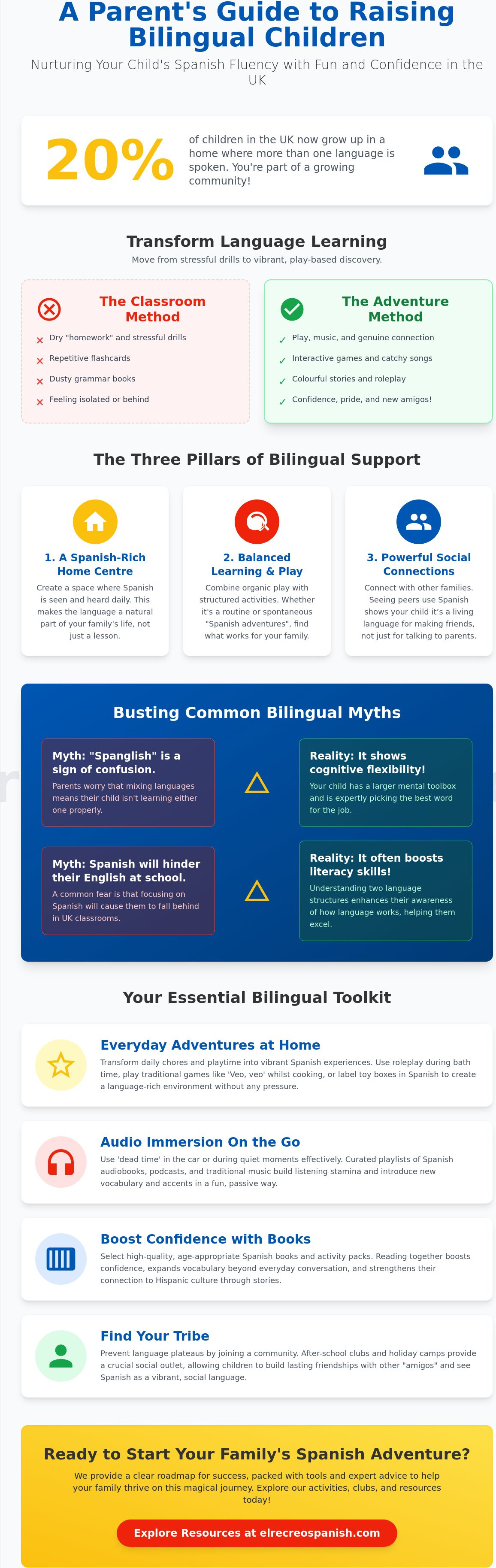
¡Hola amigos! Did you know that approximately 20% of children across the UK now grow up speaking or understanding more than one language? It's a truly wonderful gift, yet many parents worry that their little ones might fall behind in English once they start school. You might even feel a bit isolated if you lack a local Spanish-speaking community, which is why finding the right resources for bilingual families is so important. We know you want your home to be a place of vibrant discovery rather than a classroom full of dry "homework" or stressful drills.
We agree that the best way to learn is through play, music, and genuine connection. We promise to provide you with a clear roadmap for success, packed with tools and expert advice to help your family thrive on this magical journey. This guide previews a curated selection of engaging activities, digital tools, and community networks that will keep your child’s Spanish flowing with confidence and pride. Let's start this exciting adventure together!
Key Takeaways
- Transform everyday chores into vibrant Spanish adventures through roleplay and traditional games that make learning feel like playtime.
- Discover how to use high-quality audiobooks and interactive apps to build a language-rich environment during car journeys and quiet time.
- Learn why a proactive approach is essential in the UK and explore our curated resources for bilingual families to support long-term fluency.
- Understand how to select the right Spanish books and activity packs to boost your child's confidence in reading and writing.
- Find out how joining a community through after-school clubs and holiday camps can prevent language plateaus and build lasting friendships with other amigos.
What are the Best Resources for Bilingual Families?
Raising a bilingual child in the UK is a wonderful adventure, but it does require a bit of a proactive plan! Since English is the dominant language everywhere from the playground to the telly, we need to be intentional about keeping Spanish alive and kicking. Effective resources for bilingual families are much more than just dusty grammar books or repetitive flashcards. They should be a vibrant mix of catchy songs, colourful stories, and real-life connections that make the language feel "real".
The secret ingredient is something experts call "comprehensible input". This simply means your child needs to understand the message they're hearing, even if they don't know every single word yet. When Spanish is tied to their favourite activities, like kicking a football or baking, the language sticks. As your little one grows from a curious toddler into a primary school explorer, your toolkit will naturally evolve. What starts as simple nursery rhymes will eventually become interactive games and social clubs that keep the "Spanish spark" bright.
The Three Pillars of Bilingual Support
To build a strong foundation, focus on three main areas. First, create a Spanish-rich home centre. This could be as simple as Spanish labels on the toy box or a dedicated shelf for their favourite cuentos. Second, balance structured learning with organic play. Whilst some families love a set routine, others thrive on "Spanish adventures" during bath time or breakfast. Finally, never underestimate social resources. Seeing other children speak Spanish amongst themselves is incredibly powerful. It shows your child that Spanish isn't just a "home language", it's a way to make new amigos!
Debunking Common Bilingual Myths
Let's clear up some common worries that often weigh on parents' minds. Many people fear that "Spanglish" or code-switching is a sign of confusion. In reality, research into multilingualism shows this is actually a sign of brilliant cognitive flexibility. Your child is simply choosing the best word from a much larger mental toolbox!
Another common fear is that Spanish might hinder English literacy in UK schools. Actually, the opposite is true. Learning two sets of sounds and structures often makes children more aware of how language works, which can help them excel in their English lessons. Whether you choose the strict One Person, One Language (OPOL) method or a more flexible "Spanish on weekends" approach, the most important thing is to keep it fun and stress-free. Bilingualism is a gift, not a chore!
Essential Digital and Audio Tools for Spanish Immersion
In our busy lives, finding time for structured lessons can be tricky. This is where digital resources for bilingual families become your secret weapon! By weaving Spanish into your daily routine through audio and interactive play, you create a vibrant environment where the language feels natural rather than a chore. Whether you're on the school run or preparing dinner, these tools turn "dead time" into a magical Spanish adventure.
The goal is to make the language part of their favourite hobbies. When a child associates Spanish with a fun game or a catchy song, their confidence soars. It stops being a "subject" they have to learn and becomes a key that unlocks a world of entertainment and discovery. This is especially important in the UK, where English can easily become the default for all things fun.
Audio Resources for Passive Learning
Audio is a fantastic way to immerse your children in the sounds of Spanish without them even realising they're learning. For those long car journeys, curated playlists of Spanish audiobooks and podcasts are absolute life-savers. They help build listening stamina and introduce a wider variety of accents and vocabulary than your child might hear at home.
Don't forget the power of music! Traditional Spanish folk songs and nursery rhymes are perfect for building a natural "rhythm" of the language. They often use repetitive structures that make it easy for little ones to join in. You can even use smart speakers to play Spanish stories during quiet time or as a gentle background whilst they play. It's a simple way to keep the cultural connection alive every single day. If you want to take the fun further, you can explore our Spanish activities for kids for more creative ideas.
Interactive Apps and Screen Time
Quality is everything when it comes to apps and screen time. Look for interactive tools that focus on vocabulary through gaming and puzzles. The best apps are ad-free, age-appropriate, and encourage children to actually speak back to the device. Gaming makes the learning process feel like a reward, which is vital for keeping older children motivated when they might otherwise resist speaking Spanish.
Digital tools should always be a supplement to face-to-face conversation. Use the apps together! Ask your child to explain the game to you in Spanish, or compete to see who can solve a puzzle faster. A clever trick for functional language is setting your child's favourite devices or gaming consoles to Spanish. Suddenly, navigating menus and following instructions becomes a real-world task. This "functional" use of the language builds immense confidence and shows them that Spanish is a useful tool in their digital world.
Literacy and Reading: Selecting Spanish Books for Children
Books are magical windows into different worlds. For a bilingual family, they are also essential tools for building a rich vocabulary and a deep cultural bond. When searching for resources for bilingual families, the bookshop is often the first port of call. However, the choice between bilingual books and immersion books can be tricky. Bilingual books, featuring side-by-side English and Spanish text, are brilliant for parents who are still learning alongside their children. They provide a helpful safety net during bedtime stories. On the other hand, pure immersion books (written entirely in Spanish) are often more effective for older children. These books prevent them from simply "glancing" at the English text and help them fully engage with the Spanish narrative.
It's vital to choose literature that reflects the vibrant, diverse cultures of Spain and Latin America. Reading about traditional festivals or legendary figures makes the language feel like a lived experience rather than just a set of rules. Building a home library is a gradual, joyful process. It should grow alongside your child's evolving interests, whether they are obsessed with dinosaurs, space, or fairy tales. A child who loves the story will naturally want to understand the words, making the learning process feel effortless.
Choosing the Right Format
For the youngest amigos, sturdy board books are the way to go. Focus on books with tactile elements and simple nouns to build that early foundation. Toddlers thrive on picture books with engaging narratives that help them name their emotions in Spanish. As they move into primary school, encourage the transition to chapter books. This move fosters independent reading habits and proves that Spanish is a language for "big kids" too! Making this transition helps maintain interest as their English reading skills advance at school.
Where to Find Quality Spanish Books in the UK
Finding Spanish titles in the UK is much simpler than it used to be. Most local libraries now have "dual-language" sections you can explore for free. Whilst mainstream bookshops carry popular titles, online specialist retailers often provide a more authentic range of literature. Don't forget the power of Spanish activity books for kids. These are especially useful for school-aged children because they reinforce writing and grammar through puzzles and games. Using these types of resources for bilingual families ensures that literacy becomes a natural, fun part of their bilingual journey.
Creating a Language-Rich Environment Through Play
Language is alive! It's not just a set of rules to memorise in a classroom. In the UK, where English is the dominant sound in the playground, we need to make Spanish the language of "fun". One of the best resources for bilingual families is simply the power of imagination. Turn the weekly shop or tidying up into a "Spanish adventure". Assign roles, use silly voices, and let the language flow naturally through action. This child-centred approach ensures that Spanish never feels like a chore but rather a magical part of your daily life.
Traditional games like "Veo, Veo" (the Spanish version of I Spy) are brilliant for building vocabulary on the go. Whether you're waiting for the bus or walking to the park, these quick games keep the brain engaged in Spanish. For families planning a dedicated immersion trip to the capital of Spain, booking a private coach with Torres Bus is a great way to move your group around Madrid comfortably while continuing your language games. Sensory play is equally vital for younger children. Touching, smelling, and feeling things whilst hearing the Spanish words creates deep neural connections. It makes the language part of their physical world. Organising Spanish playdates is also one of the most effective social resources for bilingual families because it shows your child that Spanish is a vibrant language used by their peers. Seeing other amigos laughing and playing in Spanish builds immense pride and confidence.
Indoor Activities and Games
Cooking together is a delicious way to learn. Following a recipe for a traditional dish introduces food vocabulary and celebrates cultural heritage. Crafting is another winner. When children follow instructions in Spanish to build a paper castle or paint a masterpiece, they are practising "functional" language. Board games can easily be adapted too. Use Spanish for counting spaces, describing cards, or declaring a winner! These moments of connection make the language stick far better than any textbook.
Outdoor Learning and Exploration
Take the learning outside! Nature walks are perfect for identifying plants, birds, and insects in Spanish. It turns a simple stroll into a scientific expedition. Physical activities and sports are great too. Shouting "¡Pásame la pelota!" on the football pitch makes the language energetic and active. For a truly immersive experience, many families find that Holiday Camps are the ultimate way to boost fluency through seasonal play and group activities. These camps provide a structured yet joyful environment where Spanish is the only language of the "Recreo", helping children overcome plateaus and make lasting memories.
Professional Support and Community for Long-Term Success
As your child grows, their language needs will naturally evolve. Whilst home-based play is a brilliant start, many parents find that professional resources for bilingual families provide the extra boost needed for long-term fluency. This is especially true once children reach primary school age. At this stage, English often becomes their main social language, and Spanish can start to feel like something they only do with Mum or Dad. Professional support offers a sense of belonging that is hard to replicate alone.
External support isn't just about grammar or vocabulary. It's about showing your child that Spanish is a vibrant, living language used by people outside their front door. Whether it's through a structured class or a seasonal camp, these experiences prove that being bilingual is a special skill to be proud of. It builds a bridge between the "home language" and the "real world".
Structured Learning vs. Home Immersion
Home immersion is the heart of the journey, but professional classes add a layer of social magic. In a group setting, children see that they aren't the only ones speaking Spanish! This peer-to-peer connection is vital for building confidence. It turns Spanish from a family habit into a social tool they can use with new amigos. Learn why choose a Spanish after school club for your child to see how these sessions can complement the wonderful work you're already doing at home.
Holiday camps also play a huge role in preventing the "language plateau". These intensive bursts of Spanish through seasonal play are perfect for keeping the momentum going during long school breaks. They provide a "deep dive" into the language that helps children overcome hurdles and return to school with renewed enthusiasm for their heritage language.
Academic Milestones and Beyond
As children move into their teenage years, the focus often shifts from playful exploration to academic proficiency. Spanish is currently the most popular language at A-level in the UK, and it's predicted to overtake French at the GCSE level by 2026. This academic path provides a clear roadmap for bilingual speakers. Seeking expert GCSE Spanish tuition can help bridge the gap between casual conversation and exam success, ensuring your child's hard work at home is recognised officially.
For older children, finding a "Spanish buddy" or a mentor can be a game-changer. It gives them a safe, low-pressure space to practise their skills. Ultimately, these resources for bilingual families are about more than just passing exams. They are about raising confident, culturally aware adults. The lifelong benefits of being a bilingual adult in the UK are immense, opening doors to global careers and deep cultural connections that last a lifetime.
Start Your Spanish Adventure Today!
Raising bilingual children in the UK is a journey filled with joy, music, and deep cultural connection. By focusing on play-based immersion and choosing the right resources for bilingual families, you can ensure your child grows up with a proud sense of identity whilst maintaining fluent Spanish. Remember that every "Veo, Veo" game and every bedtime story builds the foundation for their future success. You aren't just teaching a language; you're opening a world of opportunity for your little ones.
El Recreo Spanish was founded by Spanish-speaking mothers and professionals who share your passion for heritage language maintenance. With over 10 years of experience in UK language education, we've developed dozens of vibrant Spanish books and activities designed to make learning feel like a celebration. We're here to support you every step of the way with tools that fit into your busy family life. Explore our ebook for parents raising bilingual kids for more expert tips and resources. ¡Hasta pronto, amigos!
Frequently Asked Questions
Will my child get confused if we speak two languages at home?
No, your child will not get confused by hearing two languages. Research proves that infants can distinguish between different languages from birth; it is a natural human ability. Whilst you might hear them mix words from both languages in the same sentence, this is actually a sign of cognitive flexibility rather than confusion. They are simply using their entire mental toolbox to communicate as effectively as possible!
When is the best time to start introducing Spanish to my child?
The best time to start is as early as possible! A child’s brain is incredibly "plastic" during the first few years of life, which allows them to absorb new sounds and rhythms effortlessly. Whether you start at birth or during the toddler years, the key is to make the language part of their daily routine. It is never too late to begin a Spanish adventure, but starting early makes the process feel like a natural part of growing up.
My child understands Spanish but refuses to speak it—what should I do?
This is a very common stage known as "passive bilingualism". Don't force them to speak, as this can create a negative association with the language. Instead, focus on making Spanish the language of play, music, and excitement. Finding a community of other amigos through playgroups or clubs is one of the most effective resources for bilingual families to overcome this hurdle. When they see other children using the language to play, they will naturally want to join in.
How much time per day should we spend on Spanish to see results?
Consistency is far more important than the total number of hours. Whilst some experts suggest that 30% exposure is the benchmark for active fluency, even 20 to 30 minutes of high-quality, focused interaction daily can make a significant difference. The goal is to ensure the time spent is engaging and interactive, such as reading a favourite cuento or playing a traditional game, rather than just passive listening.
Are bilingual books better than books written only in Spanish?
Both types of books serve different purposes in your home library. Bilingual books are fantastic for parents who are learning alongside their children or for providing a "safety net" during complex stories. However, books written only in Spanish are excellent for deep immersion because they prevent the child from simply "cheating" by reading the English side. Using a variety of these resources for bilingual families ensures your child builds a robust and diverse vocabulary.
How can I support my child if I don’t speak Spanish fluently myself?
You can still be a wonderful language mentor even if you aren't fluent! Use high-quality audio tools, catchy nursery rhymes, and interactive apps to provide the correct "input" for your child. By learning basic phrases like "Hola" or "Amigos" alongside them, you model curiosity and show that you value their heritage. Professional support, such as structured classes or private tuition, can also provide the expert guidance needed to keep the journey on track.
What are the main cognitive benefits of raising a bilingual child in the UK?
Bilingualism acts like a "brain gym" that strengthens problem-solving skills and improves focus. Children who grow up with two languages often find it easier to understand how language works in general, which helps them excel in their English literacy lessons at school. In the UK specifically, being fluent in Spanish provides a massive academic advantage, especially as the language continues to grow in popularity at the GCSE and A-level stages.
How do I find a local community of other bilingual families?
Start by checking your local library for "dual-language" storytime sessions or searching for Spanish-themed after-school clubs in your area. Social media groups and community centres are also great places to find a local "Spanish buddy" for your child. Building these connections is vital because it transforms Spanish from a "home language" into a vibrant social tool that helps your child make new friends and feel part of a wider community.