

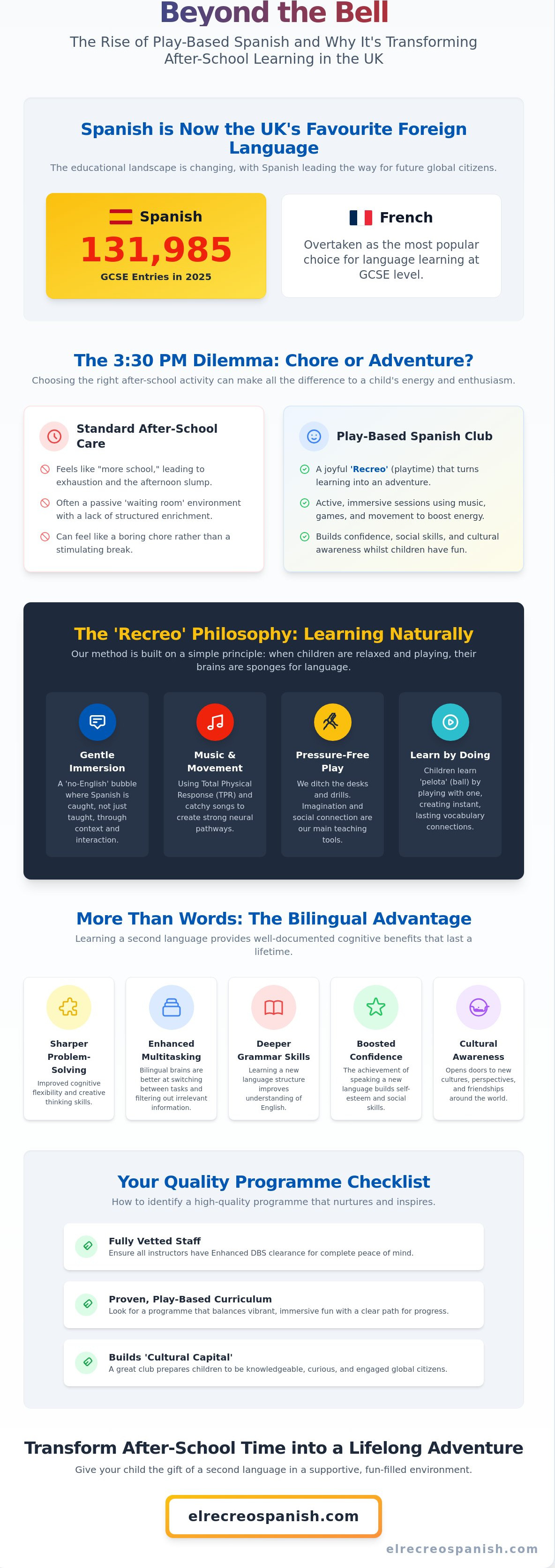
Did you know that Spanish has officially overtaken French as the most popular foreign language at GCSE level in England? With entries for Spanish rising to 131,985 in 2025, it's clear that families are looking towards a global future. Even so, we know the 3:30 pm slump is real. You might worry your child is too tired for "more school" or that language learning will feel like a boring chore. We believe after-school hours should be a time for excitement, not exhaustion. Choosing a play-based Spanish after school club transforms that time into a vibrant recreo where your child can thrive without the pressure of a traditional classroom.
We agree that childcare should be more than just a waiting room; it should be a place where your pequeños feel inspired and cared for. This article will show you how a play-based approach boosts confidence, cognitive skills, and cultural awareness whilst your child has the time of their life with their new amigos. We'll explore why 2026 is the best year to start this adventure and how you'll soon see visible progress in their speaking and social skills.
Key Takeaways
- Understand the shifting landscape of UK education and why Spanish is now the most popular foreign language for future global citizens.
- Discover how a play-based Spanish after school club uses the "Recreo" philosophy to turn language learning into a joyful adventure rather than a chore.
- Explore the cognitive benefits of the "Bilingual Advantage," from sharper problem-solving skills to a deeper understanding of English grammar.
- Learn how to vet high-quality programmes by checking for enhanced DBS clearance and curricula that balance vibrant fun with clear progress.
- Find out how El Recreo Spanish provides a supportive "second home" that guides children from their first baby playgroups all the way to GCSE excellence.
The Growing Demand for Spanish After School Clubs in the UK
Walk into any primary school playground at pick-up time, and you'll hear parents discussing more than just the weather. There is a palpable shift in what families want for their children after the final bell rings. We're seeing a move away from uninspired childcare towards purposeful enrichment. A Spanish after school club isn't just a place for children to wait for their parents; it's a structured yet vibrant environment where language comes to life through movement, music, and social connection. It's about building "Cultural Capital," a term the Department for Education uses to describe the essential knowledge children need to be educated citizens of the world.
Many parents face a difficult dilemma at 3:30 pm. Do you opt for standard after-school care where children might simply pass the time, or do you choose something that sparks curiosity? Choosing a language-focused club means you're investing in your child's global citizenship. It transforms those late-afternoon hours into a magical window of opportunity. Instead of feeling like "more school," these sessions provide a refreshing break that nourishes the mind whilst keeping the energy high.
Why Spanish is the UK’s Favourite Second Language
Spanish has officially claimed its spot as the top foreign language choice for UK families. It's easy to see why. With over 500 million speakers across the globe, it's a truly international tool for communication. For British families, Spanish culture is incredibly accessible. Whether it's a summer holiday in Alicante or a half-term trip to Barcelona, children love the immediate reward of using their new skills in the real world. Beyond the holiday fun, the long-term advantages are enormous. Learning Spanish opens doors to future travel adventures and gives young people a significant edge in the global job market. It's a gift that keeps on giving as they grow.
The Difference Between a Lesson and a Club
We understand that by the time the school day ends, children are often exhausted. This is why a Spanish after school club must look and feel different from a morning maths lesson. Traditional rote learning and repetitive grammar drills simply don't work in the afternoon window. We focus on a social, immersive environment where the language is caught, not just taught. In this relaxed atmosphere, the brain is more receptive to new sounds and structures. Beyond just vocabulary, there are well-documented cognitive benefits of being bilingual, such as improved problem-solving and multitasking. By stripping away the pressure of the classroom, we allow children to find their voice and build confianza amongst their amigos.
How Play-Based Immersion Turns Learning into a "Recreo"
"Recreo" isn't just a name; it's a philosophy. In Spain, el recreo is that magical time in the school day for play and fresh air. We bring that same spirit to every Spanish after school club session. Instead of desks and whiteboards, we use the floor, the open space, and our imaginations. Science tells us that the brain is like a sponge when it's relaxed. When children are laughing and playing, their "affective filter" is low, allowing new sounds to sink in effortlessly. This is backed by extensive research on the benefits of bilingualism, which shows that early exposure in a natural setting leads to better long-term retention.
Our immersion method is gentle but effective. We create a "no-English" bubble where Spanish is the tool for play. You might worry your child will be confused, but they adapt with surprising speed. They don't need a translation to know that pelota means ball when they're actively catching one; the context provides the meaning. It's a natural way to learn that mimics how they acquired their first language. If you're curious about how this looks in practice, you can explore our Spanish for primary school children options to see the magic for yourself.
The Role of Music and Movement
Music is the secret ingredient that beats the after-school slump. We use catchy rhythms and traditional songs to help children memorise complex verbs without even realising they're working. This is combined with the Total Physical Response (TPR) method. If we sing about jumping, we jump! If we dance to a song about colours, we point to something rojo or azul. This physical connection creates strong neural pathways. It keeps energy levels high and ensures that children leave the club feeling energised rather than drained. Movement turns a static lesson into a vibrant adventure.
Social Learning and Peer Interaction
Learning a language is a social act. In our clubs, children don't just learn from a teacher; they learn from each other. We foster a "second home" atmosphere where Spanish becomes the natural language of friendship. Small group conversations and collaborative games help build immense confidence. When a child sees their peer successfully asking for a lápiz, they feel empowered to try it too. This peer-to-peer support creates a safe space where making mistakes is just part of the fun. It's about building a community of little linguists who support one another's growth.
Beyond Vocabulary: The Cognitive and Cultural Advantages
While many parents enrol their children in a Spanish after school club to pick up a new language, the "hidden" rewards go much deeper than just learning how to say hola. Primary school children are in a unique developmental window. Their brains possess a level of plasticity that adults can only dream of, making it the "golden age" for language acquisition. During these years, the brain is busy building complex neural pathways. Introducing a second language doesn't just add a new skill; it physically reshapes how a child thinks and processes information.
This "Bilingual Advantage" manifests as improved executive function. Children who regularly engage with two languages often show superior problem-solving and multitasking abilities. They become adept at filtering out distractions and switching between tasks with ease. Beyond these mental gymnastics, learning Spanish actually strengthens a child's grasp of English. By comparing two different systems of speech, they start to notice patterns in grammar and syntax that they might have otherwise ignored. It's a wonderful way to boost their overall communication skills whilst they're busy having fun with their amigos.
Boosting Academic Performance Across the Board
The benefits of being a little linguist extend far into other school subjects. Research consistently shows that children who study a second language often perform better in maths and creative arts. This is partly due to the enhanced meta-linguistic awareness they develop; they understand the "how" and "why" of language structure. Spanish is a beautifully phonetic language, meaning it's spelled exactly as it sounds. This logical structure helps children with their general literacy and spelling, as it encourages them to pay closer attention to letter-sound relationships. It builds a foundation of academic confidence that carries over into every classroom lesson.
Developing a Global Mindset
In our vibrant sessions, we don't just teach words; we open a door to a wider world. We introduce our pequeños to the rich traditions, delicious food, and fascinating history of the Spanish-speaking world. This exposure fosters deep empathy and open-mindedness from a young age. It prevents insular thinking and prepares children to navigate a globalised future with curiosity rather than fear. Cultural capital is the collection of knowledge, behaviours, and skills that a child can draw upon to demonstrate their cultural awareness and navigate the world with confidence. By celebrating diversity through music and stories, we help them become true global citizens.
Key Features of a High-Quality Language Programme
Choosing the right Spanish after school club is about more than just finding a convenient time slot. You're looking for a safe, happy environment that sparks a lifelong love for language. With so many options available, it's helpful to have a clear checklist to ensure your child receives the best possible experience. High-quality programmes don't just happen by accident; they're carefully designed to balance emotional well-being with academic growth. Here are five essential steps to help you evaluate a club:
- Step 1: Check the Mentors. Ensure instructors are fluent or native speakers with a genuine passion for early years education. Every staff member must hold a current enhanced DBS check to ensure your child's safety.
- Step 2: Review the Curriculum. Look for a programme that balances vibrant fun with measurable progress. Your child should be gaining visible confidence in their speaking and listening skills each term.
- Step 3: Evaluate the Resources. Does the club provide physical books, activity sheets, or digital support? Quality resources help bridge the gap between the club and your home life.
- Step 4: Look for a Long-Term Pathway. A great club offers a journey. Check if they provide a route from primary playgroups all the way up to GCSE Spanish tuition.
- Step 5: Confirm Safeguarding Standards. Safety is paramount. Confirm that the organisation follows strict safeguarding protocols and maintains a caring, professional atmosphere.
What Makes an Exceptional Spanish Teacher?
An exceptional teacher is a "magical" mentor who can switch between being a playful guide and a professional educator in an instant. We believe that cultural authenticity is vital. A teacher with a native-level accent helps children pick up the correct pronunciation effortlessly from day one. At El Recreo, we vet and train our mentors to ensure they don't just teach Spanish; they live it. They create a "second home" feel where every child feels seen, heard, and encouraged to find their voice.
Resources for Raising Bilingual Kids
Learning shouldn't stop when you leave the club. High-quality programmes provide tools that allow the adventure to continue at home. Physical books and colourful activity sheets reinforce what was learned during the session. Many parents worry they can't help because they don't speak Spanish themselves, but you don't need to be a linguist to be supportive. Listening to songs together or using our ebook for parents raising bilingual kids can make a world of difference. These resources provide the structure you need to nurture your child's progress with confidence.
Ready to see your child thrive in a supportive, immersive environment? Explore our after school clubs today and start your family's Spanish adventure.
Why El Recreo Spanish is the Perfect Choice for Your Family
At the heart of El Recreo Spanish are our founders, Paula and Maria. They didn't just want to start a language school; they wanted to build a community. Their vision was to create a space where bilingual education feels like a warm, natural extension of a child's day. When you choose an El Recreo Spanish after school club, you're stepping into a world built on professional expertise and a deep, caring love for children. We've replaced the stiff atmosphere of a traditional classroom with something far more special. Our clubs are defined by a vibrant, interactive, and caring energy that makes every child feel like they've found a second home.
Our unique franchise model ensures this high-quality local delivery across the UK. We carefully vet and train local mentors who share our passion for the "Recreo" philosophy. This means your child gets the benefit of a national curriculum and proven methods, delivered with the personal touch of a local teacher who knows their name and celebrates their progress. We believe that learning a language should be a joyful adventure, not a chore. This commitment to a caring environment is what sets us apart from generic childcare providers. We don't just mind your children; we inspire them to become confident global citizens.
A Complete Educational Pathway
We're proud to offer a journey that grows with your child. Many of our amigos start with us in baby playgroups and stay with us for years. This longevity creates a wonderful sense of belonging and stability. As they move into primary school, our after-school sessions keep the spark alive. When the teenage years arrive, we're still there to help. We provide specialised support for GCSE Spanish preparation, helping students navigate exam pressure with the same confidence they built as toddlers. Beyond our weekly clubs, we offer holiday camps and private tuition to ensure there's always a way to keep the Spanish adventure going, no matter your schedule.
Join the El Recreo Family
Finding a club near you is easy, and we promise a warm welcome for every new student. Our booking system is designed to be simple and stress-free for busy parents. If you're passionate about bilingualism and want to bring this magic to your own community, you might even explore our franchise opportunity. We love welcoming new partners who want to share the joy of Spanish with the next generation. Whether you're a parent looking for enrichment or an educator looking for a new path, there's a place for you in our family. It's time to turn after-school hours into a time of discovery and laughter.
Explore our Spanish after school clubs and book a session today to start your child's journey towards bilingualism.
Give Your Child the Gift of a Global Future
The journey to bilingualism is a vibrant adventure that starts with a single "Hola!" We've seen how Spanish is now the leading choice for UK families, offering unmatched cognitive benefits and cultural capital. By choosing a Spanish after school club, you aren't just arranging childcare. You're giving your child a magical space to build self-confidence and social skills amongst friends. Our play-based "Recreo" method ensures they stay energised and inspired, even after a long day at school.
Founded in 2013 by mothers and professional linguists, El Recreo Spanish is built on a foundation of trust and expertise. Our national franchise network features DBS-checked expert linguists who treat every session as a joyful discovery. With comprehensive resources like our physical books and ebooks for bilingual families, we support your child's growth every step of the way. It's time to turn those late-afternoon hours into a celebration of culture and music.
Find a Spanish After School Club and Start Your Child’s Adventure
We can't wait to welcome your little ones into our community. Let's make 2026 the year your child finds their voice in Spanish!
Frequently Asked Questions
What age is best to start a Spanish after school club?
Children can start their language journey at any age, but starting as early as possible takes full advantage of natural brain plasticity. We offer classes for everyone from babies and toddlers to primary school pupils and teenagers. The "golden age" for picking up a native-level accent is usually before age seven. Our sessions are carefully tailored to each developmental stage, ensuring the games and music are always age-appropriate and engaging.
My child is a complete beginner; will they feel left out in a Spanish club?
Complete beginners will feel right at home because our immersion method is designed to be inclusive and supportive from day one. We use visual aids, catchy songs, and expressive gestures to ensure every child understands the context of our play. Since the focus is on fun rather than testing, new amigos quickly pick up high-frequency words through social interaction. We celebrate every small win to build their confidence immediately.
How long does it take for a child to start speaking Spanish fluently?
Fluency is a long-term adventure that varies for every child, but you'll likely see visible progress in their listening and confidence within the first term. A Spanish after school club provides the consistent exposure needed to move from single words to short sentences. While true fluency takes years of practice, our structured pathway ensures they stay motivated and excited as they gradually build their conversational skills and vocabulary.
Can a Spanish after school club help with my child’s school MFL curriculum?
Yes, our clubs perfectly complement the primary Modern Foreign Languages (MFL) curriculum by providing the conversational practice that school settings often lack. We reinforce the vocabulary and grammar children learn in class but deliver it through a vibrant, social lens. This extra exposure gives them a significant head start, making them feel more comfortable participating in school lessons and preparing them for the transition to secondary school Spanish.
What happens if my child is too tired after school for a language club?
We designed our "Recreo" philosophy specifically to tackle the 3:30 pm slump by making our sessions high-energy and refreshing. Instead of sitting at desks, children are moving, dancing, and playing games that re-energise their minds. It doesn't feel like "more school" because it's built around the joy of playtime. Most parents find that their children leave the club feeling more vibrant and excited than when they were picked up.
Do parents need to speak Spanish to help their children with the club activities?
You don't need to speak any Spanish at all to support your child's progress. We provide colourful resources, including physical books and activity sheets, that make it easy for you to follow their journey at home. Our ebook for parents raising bilingual kids is also a wonderful guide for those who want to encourage learning without being fluent themselves. Your main role is simply to be an enthusiastic cheerleader for their new skills.
What safety checks do your Spanish teachers undergo?
Every instructor in our network undergoes a rigorous vetting process, including an enhanced DBS check, to ensure the highest safety standards. This is a mandatory requirement for anyone working with children in the UK, and we take our safeguarding responsibilities very seriously. Our teachers are not only expert linguists but also trained mentors who prioritise creating a secure, caring, and professional environment where every child can thrive with total peace of mind.
Are there Spanish clubs for older children preparing for GCSEs?
We offer a complete educational pathway that includes specialised GCSE Spanish tuition for teenagers. These sessions are designed to bridge the gap between playful primary learning and the academic rigour of secondary exams. We help students master complex grammar and build the confidence needed for their speaking assessments. It's a supportive environment that takes the stress out of exam preparation whilst maintaining a love for the Spanish language and culture.