

¡Hola amigos! Imagine your teenager sitting at the kitchen table, head in hands, staring at a Spanish vocabulary list that feels like an impossible puzzle. The jump from KS3 to the new 2026 specification is a significant hurdle. It’s heart-breaking to see their early love for the language replaced by exam anxiety, which is why many parents are now seeking expert GCSE Spanish tuition to bridge the gap. You aren't alone if you're worried about those daunting new read aloud tasks or the pressure of spontaneous speaking. We know how stressful this season feels for the whole family.
The good news is that the right support can transform that overwhelmed feeling into genuine linguistic confidence and much higher grades. This guide provides everything you need to know about navigating the upcoming 2026 exams, from understanding the latest AQA and Edexcel changes to finding a mentor who makes learning feel like a vibrant adventure. We'll show you exactly how to help your child make that exciting leap from a grade 5 to an 8, ensuring they walk into the exam hall with a smile and a can-do attitude.
Key Takeaways
- Identify the specific challenges of the new 2026 Spanish specification and why starting early is vital for building exam confidence.
- See why bespoke GCSE Spanish tuition is the most effective way to master the spontaneous speaking element and the new dictation tasks.
- Compare the intensity of private lessons with the collaborative energy of small groups to decide which environment best supports your child’s learning style.
- Uncover the "Recreo" philosophy of using active recall and immersive activities to transform revision from a chore into an exciting cultural journey.
- Learn how native-speaking tutors help teenagers navigate the jump from KS3 with a personalised programme designed to secure top grades.
What is GCSE Spanish Tuition and Why is it Essential in 2026?
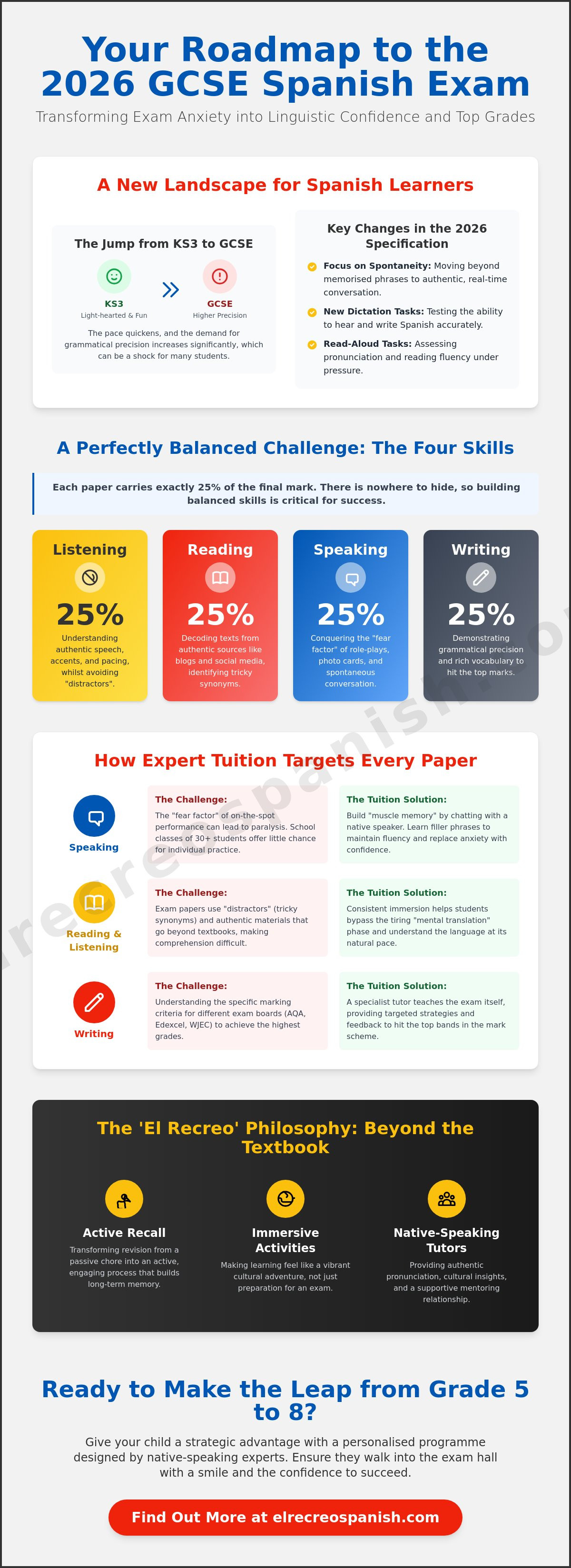
¡Hola! It is an exciting time to be learning Spanish. In 2025, Spanish officially became the most popular modern foreign language in UK schools, surpassing French for the first time. However, with popularity comes a new level of academic challenge. The 2026 exam season introduces a brand new specification that changes how students are assessed. Specialist GCSE Spanish tuition is no longer just about extra homework; it is a vibrant, bespoke programme designed to help your teenager master the four pillars of language: listening, reading, speaking, and writing.
The 2026 landscape is significantly different from previous years. Examiners now prioritise authentic, spontaneous language over the rote-memorisation of dry textbook phrases. With the introduction of new tasks like dictation and reading aloud, having the support of a native speaker is a total game-changer. It helps students move away from "translating in their head" and towards actually thinking in Spanish. This shift from simple recall to active, confident communication is exactly what makes expert support so valuable today.
The Jump from Year 9 to Year 10
Many students find the first term of Year 10 quite a shock. In Key Stage 3, lessons are often light-hearted and focused on basic vocabulary, but the General Certificate of Secondary Education (GCSE) demands a much higher level of grammatical precision. This is where teenagers often start to feel lost as the pace quickens. Expert tuition acts as a vital safety net. By building a rock-solid foundation early on, we ensure that Year 11 becomes a season of calm refinement rather than a stressful rescue mission. It is about turning that initial confusion into a "Spanish adventure" they actually enjoy.
Meeting the Requirements of AQA, Edexcel, and WJEC
Whilst the core themes of family, town, and work are similar across all exam boards, the way marks are awarded varies wildly. A specialist tutor doesn't just teach the language; they teach the exam itself. Whether your child is sitting the AQA, Edexcel, or WJEC papers, they need to understand the specific "traps" in the listening paper or how to hit the top band in the writing mark scheme. We also help families navigate the choice between Higher and Foundation tiers, ensuring every student feels challenged but never overwhelmed. This targeted approach turns GCSE Spanish tuition into a clear, strategic roadmap for success.
Mastering the Four Skills: How Tuition Targets Every Exam Paper
The GCSE exam is a perfectly balanced challenge. Each of the four papers—Listening, Reading, Speaking, and Writing—carries exactly 25% of the final mark. It's a fair system, but it means there's nowhere to hide. If a student feels shaky during the speaking exam, it can significantly pull down their overall grade. In a typical school setting with thirty students, teachers simply cannot provide enough one-to-one practice. This is why GCSE Spanish tuition is so transformative. It provides a dedicated, vibrant space where your child is the only voice that matters, allowing them to practice until the language feels like second nature.
Conquering the Speaking Exam
The "fear factor" of the speaking exam is often the biggest hurdle for teenagers. Whether it's the photo card, the role-play, or the new read-aloud task for 2026, the pressure to perform on the spot can be paralysing. We replace that anxiety with "muscle memory." By chatting regularly with a native speaker in a supportive, caring environment, students learn to navigate conversations naturally. We teach them clever "filler" phrases and strategies to stay fluent even if a specific word slips their mind. It's about building the confidence to keep the rhythm going without the panic of a silent room.
Decoding the Reading and Listening Papers
These papers are often full of "distractors"—tricky synonyms and near-misses designed to catch students out. The official GCSE Spanish subject content for 2026 now includes more authentic materials, such as blogs and social media messages. We help students look beyond the standard textbook lists to understand how Spanish is actually used in the real world. Through consistent immersion, students eventually bypass the exhausting "mental translation" phase and start understanding the language at its natural pace.
Finally, we tackle the Writing paper. Moving from simple, "safe" sentences to complex linguistic structures is what separates a grade 5 from a grade 8. We show them how to weave in different tenses, idiomatic expressions, and sophisticated opinions that make the examiner take notice. It's about moving beyond basic phrases to more nuanced arguments that demonstrate true flair. If you want to see your teenager truly flourish, our GCSE Spanish tuition provides the personalised, expert roadmap they need to shine in every single paper.
Private Tuition vs. Group Revision: Which is Right for Your Child?
Every teenager has a unique way of soaking up a new language. Some thrive when the spotlight is entirely on them, while others feel more energised when they're part of a team. Choosing between private and group GCSE Spanish tuition doesn't have to be a headache. It’s about finding the environment where your child feels most comfortable taking linguistic risks. At El Recreo, we bring our signature warmth and "vibrant" energy to both formats, ensuring that no matter the setting, the experience feels like a personal journey rather than a dry academic exercise.
The Benefits of One-to-One GCSE Spanish Tuition
Private lessons offer an incredible level of intensity and focus. If your teenager is struggling with a very specific area—perhaps they've mastered vocabulary but feel completely lost with the subjunctive mood—one-to-one support is the answer. We can slow down, breathe, and tackle those hurdles at a personalised pace. This format is also a lifesaver for busy Year 11 students. We can easily organise sessions around a hectic mock exam timetable, providing a flexible safety net when the pressure starts to mount. The deep bond formed between a student and their mentor creates a "second home" atmosphere where they feel brave enough to speak up without the fear of being judged by peers. It is about building that solid foundation mentioned earlier, ensuring the official AQA GCSE Spanish specification feels manageable rather than overwhelming.
Why Small Group Tuition Can Be a 'Game-Changer'
Don't underestimate the power of a small, supportive group! Small group sessions are a "game-changer" for teenagers who enjoy social interaction. Hearing a peer successfully navigate a role-play or use a clever idiom provides a huge boost in motivation. It turns revision into a shared "Spanish adventure" amongst friends. These sessions are brilliant for simulating real-life conversation scenarios in a safe, caring environment. For a child who might feel a bit shy, seeing others make mistakes and laugh them off is incredibly liberating. It builds a different kind of confidence; the ability to communicate within a group dynamic is a vital life skill that goes far beyond the exam hall. Plus, group models are often a very cost-effective way to access expert native-speaker support throughout the long revision months. Whether it's one-to-one or a small group, our goal is to transform that exam anxiety into pure linguistic joy!
Effective Revision Strategies: Moving Beyond the Textbook
Revision doesn't have to be a grey, textbook-heavy chore. We believe in turning the lead-up to exams into a "Spanish adventure" where the language truly comes alive! To get the best out of GCSE Spanish tuition, we encourage students to step away from passive reading and embrace active, vibrant methods. When revision feels like a discovery rather than a punishment, the information actually sticks.
- Step 1: Use active recall. Staring at a list of vocabulary is rarely effective. Instead, use flashcards or "blurting" techniques to test what is actually inside the brain.
- Step 2: Normalise the language. Encourage your teenager to swap one English Netflix show for a Spanish series with subtitles. Listening to Spanish podcasts or music during a commute helps the ear adjust to natural rhythms.
- Step 3: Practice little and often. A 15-minute daily burst of immersion is far more powerful than a three-hour Sunday slog. It keeps the "linguistic muscles" warm and ready.
- Step 4: Build resilience with timed mocks. Doing a past paper under exam conditions helps students manage their time and reduces the shock of the real exam hall.
Using Educational Resources Effectively
It is vital to balance traditional revision guides with authentic materials. While a guide is great for grammar, reading real Spanish blogs or news snippets prepares students for the 2026 focus on real-life communication. You can also integrate fun Spanish activities for kids and teenagers into their weekly routine to keep engagement high. Digital tools and apps are brilliant for vocabulary drills, but they should support, not replace, deep conversation practice. Mixing these resources ensures your child stays curious and motivated throughout the year.
Managing Exam Stress and Anxiety
A positive mindset is just as important as knowing irregular verbs. Our "warm and inviting" approach means a tutor acts as much as a confidence coach as a teacher. We focus heavily on the 12-minute speaking exam preparation time. We teach students how to use those few minutes strategically to jot down high-level structures and plan their answers calmly. If a student feels supported and cared for, their anxiety naturally melts away. They start to see the exam as an opportunity to show off what they know. If you’re looking to turn revision into a joyful experience, our specialised GCSE Spanish programmes are here to help your teenager shine.
Why El Recreo Spanish is the Premier Choice for GCSE Tuition
Choosing the right support for your child's final exams is a big decision. At El Recreo Spanish, we believe that GCSE Spanish tuition should be more than just a series of repetitive drills. Our unique "immersion through joy" methodology ensures that even at secondary level, the language remains a vibrant, exciting part of a teenager's life. We don't just want to help them pass a test; we want to build lifelong linguists who feel a genuine connection to the Spanish-speaking world. This passion for the language is what transforms a grade 5 student into a confident grade 8 or 9 candidate.
Our tutors are true experts in the UK curriculum. They have a deep, practical understanding of what AQA, Edexcel, and WJEC examiners are looking for in the 2026 specification. Because we offer Spanish for all ages, we've often guided students from their very first words in primary school all the way to their final GCSE papers. This long-term expertise means we know exactly when to push for more complex grammar and when to focus on building emotional resilience. It is a journey we take together. We ensure your teenager feels supported, cared for, and inspired every step of the way.
The El Recreo Difference: Native Expertise & Warmth
Founded by Paula and Maria, El Recreo was built on a passion for sharing the magic of Spanish culture. Our native-speaking tutors are far more than just teachers; they are playful mentors who bring the language to life through authentic conversation and cultural stories. We strive to create a "second home" atmosphere where your teenager feels safe to make mistakes and celebrate their progress. This warmth is what makes our GCSE Spanish tuition stand out amongst more rigid, academic institutions. We believe that a happy, relaxed student is a student who learns at twice the speed!
Ready to Start Your Spanish Journey?
The first step towards exam success is simple. We begin with a friendly consultation to assess your child’s current level and identify their specific goals for the 2026 season. In a typical El Recreo session, you can expect a fast-paced, rhythmic flow that moves seamlessly between exam technique and natural conversation. There are no boring, dry lectures here! Instead, we focus on interactive activities that keep energy levels high and ensure every minute is productive. Secure your teenager's spot today and let’s turn that exam anxiety into a Spanish adventure they'll never forget. ¡Hasta pronto, amigos!
Ready to see your child flourish? Book your GCSE Spanish consultation here and start the journey to top grades.
Empower Your Teenager for 2026 Success
The path to 2026 exam success is a journey of discovery, not just a series of tests. By bridging the gap between Year 9 and the higher demands of the new specification, your teenager can transform their anxiety into genuine linguistic flair. We've explored how mastering the four key skills, choosing the right learning environment, and moving beyond dry textbooks can make all the difference. Specialist GCSE Spanish tuition provides that vital safety net. It ensures your child doesn't just learn a list of words but actually starts to think and breathe in Spanish.
Our expert native-speaking tutors are dedicated to a vibrant, confidence-building methodology that brings results. We're proud of our proven track record of grade improvements, helping students leap towards top marks while enjoying every step. It's about creating a "second home" where the language feels natural, alive, and exciting. Don't let the pressure of mocks and finals dampen their passion for learning.
Book your GCSE Spanish tuition consultation with El Recreo Spanish today and let's make this exam season a celebration of progress. We can't wait to help your teenager shine! ¡Hasta pronto!
Frequently Asked Questions
When is the best time to start GCSE Spanish tuition?
The best time to start is at the beginning of Year 10 to ensure a smooth transition from Key Stage 3. Starting early allows your teenager to build a rock-solid foundation in grammar and vocabulary before the pressure of Year 11 begins. This proactive approach prevents them from feeling overwhelmed and ensures that revision becomes a steady, joyful process rather than a stressful last-minute cram.
Can a tutor help if my child is doing the Higher Tier paper?
Specialist tutors are highly effective at supporting students taking the Higher Tier paper by focusing on sophisticated linguistic structures. We help teenagers move beyond basic descriptions to master the complex tenses and idiomatic expressions required for the top grades. This targeted GCSE Spanish tuition ensures they can handle the more challenging reading and listening materials with absolute confidence and flair.
How do I help my teenager with Spanish speaking exam anxiety?
Regular conversation practice in a supportive, caring environment is the most effective way to manage speaking exam anxiety. By chatting with a native speaker, students build the muscle memory needed to handle spontaneous questions with ease. We teach specific techniques for using the 12-minute preparation time wisely and provide clever filler phrases that keep the conversation flowing, even if they feel a bit nervous.
Is online GCSE Spanish tuition as effective as face-to-face?
Online tuition is just as effective as face-to-face learning and offers much-needed flexibility for busy families. Modern interactive tools allow us to create a vibrant, engaging environment that feels personal and warm. Many students actually prefer the digital format as it allows them to access expert native-speaker support from the comfort of their own home, making it easier to fit into a hectic Year 11 schedule.
What is the difference between a GCSE Spanish tutor and a general language teacher?
A specialist tutor focuses specifically on the exam board criteria and assessment objectives, whereas a general teacher must follow a broad curriculum for a whole class. Tutors act as mentors who can spot your child's unique weak points and tailor every session to fix them. They have a deep understanding of the 2026 specification, including the new dictation and read-aloud tasks that require specific practice.
How many hours of tuition per week are recommended for Year 11?
One to two hours of tuition per week is the recommended amount for most Year 11 students to see significant progress. This frequency allows for a consistent rhythm of learning without adding too much weight to their existing workload. Short, regular bursts of practice are far more effective for language retention than long, infrequent sessions, helping to keep their skills sharp and their confidence high.
Do you provide support for the WJEC or Edexcel boards specifically?
We provide expert support for all major UK exam boards, including AQA, Edexcel, and WJEC. Each board has its own unique style and assessment structure, so we ensure our GCSE Spanish tuition is perfectly aligned with the specific requirements of your child's school. We use board-specific past papers and marking rubrics to guarantee they are fully prepared for every part of the assessment.
How much does GCSE Spanish tuition typically cost in the UK?
The cost of language support varies across the UK based on the tutor's level of expertise and the specific format of the lessons. Generally, online sessions and small group revision can offer different price points compared to in-person private tuition. We recommend looking for a provider who offers a clear, transparent structure so you can plan your budget alongside your child's academic needs.